Be first in line. join the waitlist →

Shilpi Shares Her Entrepreneurial Journey with Harvard Women in Entrepreneurship

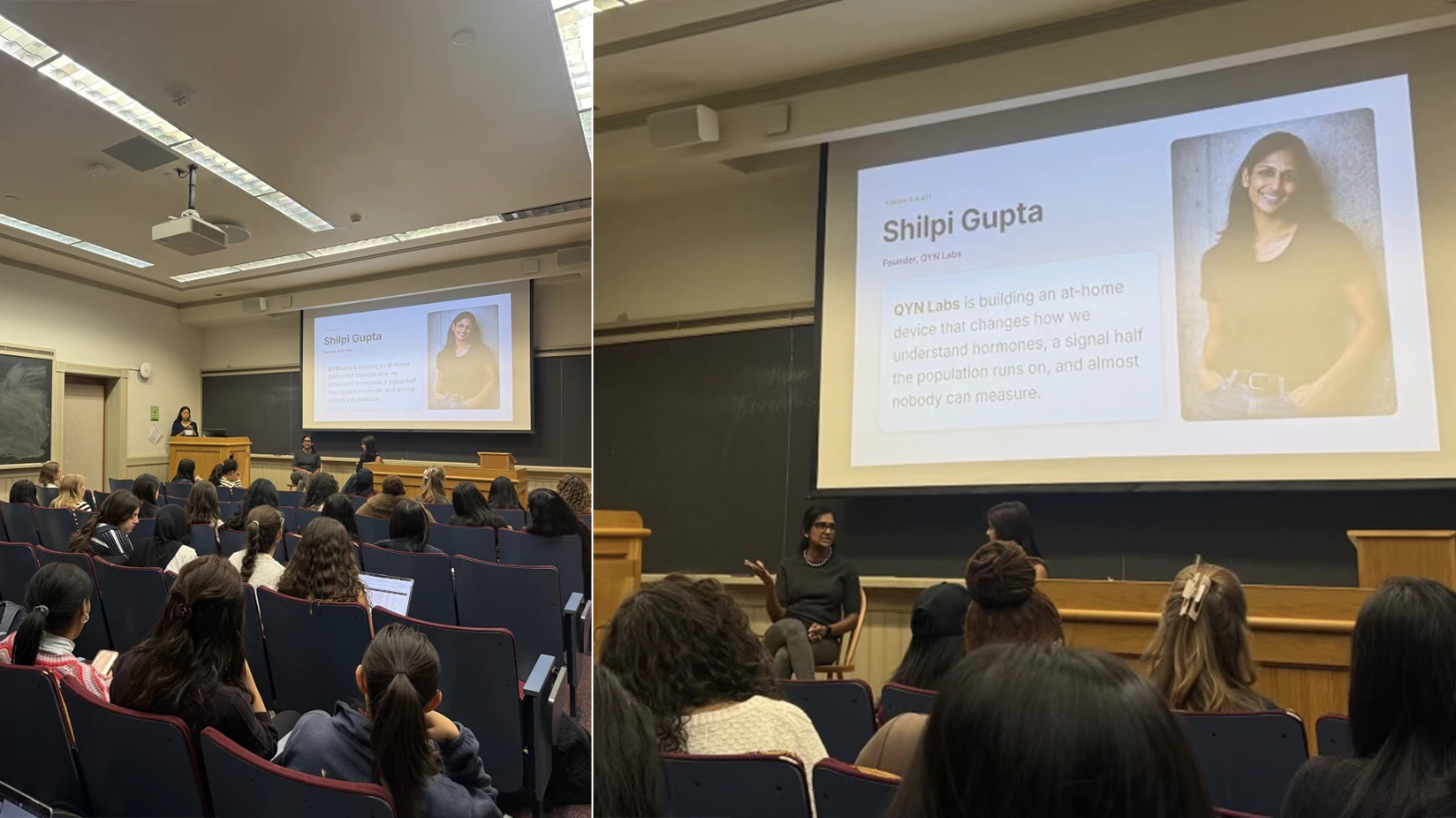
Qyn Labs founder and CEO Shilpi Gupta recently joined Harvard Women in Entrepreneurship for an inspiring conversation about building a deep tech company, putting customers first, and creating meaningful change through innovation.

What began as an opportunity to share Qyn's mission and the journey behind building a new approach to hormone health became a thoughtful exchange with the next generation of women entrepreneurs.

The students brought ambitious ideas, insightful questions, and a clear understanding of the problems they hope to solve. Their curiosity and enthusiasm reinforced an important belief: entrepreneurship isn't defined by a perfect résumé or a traditional path. It's driven by the willingness to ask difficult questions, challenge existing approaches, and build solutions that make a meaningful difference.

Throughout the conversation, Shilpi shared several lessons from her own entrepreneurial journey and the experience of building Qyn.

You Don't Need a Perfect Résumé to Build a Deep Tech Company

Building a deep tech company requires curiosity, persistence, and a willingness to understand a problem at every level.

While experience can be valuable, it isn't the only path to innovation. Sometimes, approaching an established industry with a fresh perspective allows entrepreneurs to recognize opportunities that others have overlooked.

For aspiring founders, Shilpi emphasized the importance of understanding the layers of the problem they're trying to solve and remaining curious enough to keep learning.

You don't need to have every answer before you begin. You need to be willing to ask questions, seek expertise, and continue learning as you build.

Be Obsessed with the Customer, Not Just the Technology

Technology should exist to solve a real problem.

At Qyn, that principle guides the development of an at-home, blood-based hormone measurement system designed to help women better understand how their hormone levels change over time.

For a woman navigating perimenopause, menopause, or hormone therapy, the goal isn't simply to have access to another piece of technology or another health metric.

She wants to understand what's happening in her body, how her hormones are changing, and what those changes might mean for her individual experience.

By keeping the needs of women at the center of product development, Qyn is working to bridge the gap between isolated hormone measurements and a more personalized understanding of hormone health.

It's a reminder that innovation begins with listening to the people you're building for.

Credibility Is Earned, Not Marketed

Trust is essential when building a product that people may rely on to better understand their health.

For Shilpi, credibility comes from demonstrating real results, being transparent about what a technology can and cannot do, and showing people how their personal health information will be protected.

As Qyn continues to develop its technology, these principles remain central to the company's approach.

Building trust requires more than communicating a compelling vision. It means doing the work to support that vision through science, responsible product development, and a commitment to the people the technology is intended to serve.

Build Something You Believe In

Shilpi also encouraged the students to think deeply about what motivates them to become entrepreneurs.

Her own experiences inspired her to question why women have historically had such limited visibility into their changing hormone levels and what could be possible if hormone measurement became more accessible.

That personal connection helped inspire the creation of Qyn.

But she emphasized that founders don't necessarily need to have experienced a problem themselves to build a meaningful solution.

What matters is finding a problem they genuinely care about solving and being honest about their motivation for pursuing it.

Entrepreneurship requires persistence, especially when building something new. Having a meaningful connection to the work can help sustain that commitment through the inevitable challenges of bringing an idea to life.

Looking Ahead to the Next Generation of Women Entrepreneurs

The conversation at Harvard was an opportunity to share the Qyn story, but it was also a reminder of the extraordinary potential of the next generation of women founders.

Their ambition, curiosity, and thoughtful questions reflect a future in which more women are not only participating in innovation but helping define the problems worth solving.

A special thank you to the Harvard Women in Entrepreneurship board for hosting Shilpi and to every student who participated in the conversation and stayed afterward to continue asking questions.

‍

We look forward to seeing what you build.

‍

Interested in what we're building at Qyn?

‍

Qyn is developing an at-home, blood-based hormone measurement system designed to help women better understand their changing hormone levels over time.

Join our free waitlist to follow our progress, receive early updates, and learn about opportunities to be among the first to experience Qyn.
Join the Qyn Waitlist

‍

Continue Reading

Press
24.08.2026
/
0
Shilpi Gupta on DigitalHealth InvestorTalk: The Consumer Home Healthcare Revolution

The future of healthcare is moving closer to home, and hormone health is no exception.

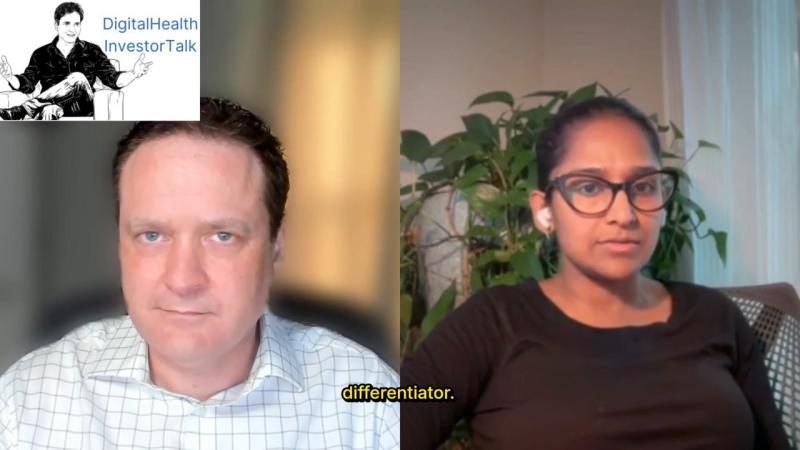
Qyn Labs founder and CEO Shilpi Gupta recently joined host Steve Wardell on the DigitalHealth InvestorTalk podcast to discuss the rise of at-home medical testing and how emerging technologies are giving consumers more opportunities to take an active role in understanding their health.

‍

As healthcare continues to evolve beyond traditional clinical settings, Shilpi shares how Qyn is working to bring convenient, blood-based hormone measurement into the home, helping women navigate perimenopause, menopause, and hormone therapy with greater visibility into their changing hormone levels.

‍

From the growing demand for personalized health data to the future of consumer-driven healthcare, their conversation explores what happens when women have access to more information about their bodies, more frequently.

‍

Listen to the full conversation on Spotify:

https://open.spotify.com/episode/69RsX7FR7aSwwubqNPqw5y

Press
16.09.2026
/
0
Inside Qyn: Building Hormone Intelligence at the Intersection of Science and AI

What does it actually take to build a new way of measuring and understanding hormones?

‍

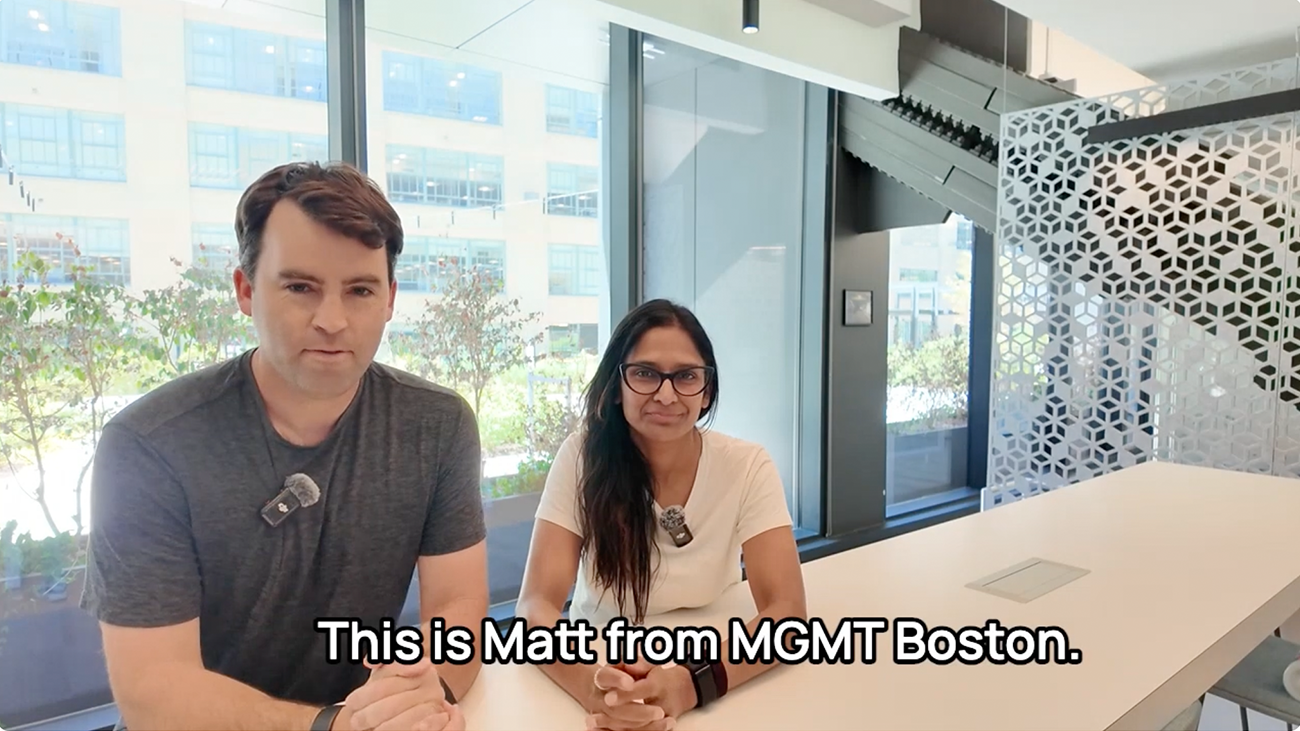
Qyn founder and CEO Shilpi Gupta sat down with Matt Crane on The Lantern at the Wyss Institute at Harvard University to talk about what’s happening behind the scenes at Qyn — from the science of at-home blood-based hormone measurement to the intelligence layer designed to connect hormone trends with signals people are already tracking through their wearables.

‍

It’s also a conversation about building deep technology itself. Shilpi discusses why getting the underlying measurement right has to come before adding AI, what the team has learned while developing Qyn, and why creating something new in health requires both speed and scientific rigor.

‍

For anyone curious about not only what Qyn is building, but how we’re building it, this is a closer look inside the work.

‍

Watch the full conversation on The Lantern →

‍

‍

Female Body
15.09.2026
/
0
What a time to be a Menopause Doc!

I always say to my patients, "I feel so lucky to be a Menopause provider right now, when I meet your concerns with YES! Of course we can consider HRT."

‍

However, that is an oversimplification of what is happening in women's health right now. There's a debate, especially in the menopause space, and you've probably seen it play out on social media. Providers sparring publicly, staking out positions, drawing lines. I understand the impulse. As providers, we were trained to defend our knowledge, to hold the line on "evidence-based medicine" as if it were a fortress, and not to succumb to patient whims as though we were a service industry.

‍

But as I watch it unfold, I keep asking myself: What's at the center of this work? Because it doesn't feel like it's the patient.

‍

In an age where FemTech can be worth billions, where social media turns expertise into influence and influence into empire, I wonder how much of what we're watching is really about women's health and how much is about money, spotlight, power, and the very human need for security.

‍

These forces have a way of quietly moving into the apex, displacing the thing that was supposed to be the fulcrum all along.

‍

When I was in training, I learned a few things that I'm now working to unlearn. I learned to hold boundaries firmly by telling women that certain symptoms were "not a GYN issue." I learned to be cautious and conservative, to wait until the evidence is airtight before acting. And I learned implicitly that the doctor's knowledge was what mattered most in the room.

‍

I practice very differently now. And I know exactly when the shift began.

‍

When I was pregnant in 2020, working in person during the height of COVID-19 uncertainty, I tried to figure out how to protect my growing baby while also showing up for my department and my patients. The data was sparse, but the logic felt clear to me: Flu A and B are known to be dangerous in pregnancy; why would we assume a novel respiratory virus was any different? I asked for a simple accommodation: to avoid working directly with known COVID-positive patients.

‍

I was met with resistance from my department chair and from my own OB provider at another institution, both seasoned clinicians, both mothers, both long-term mentors of mine. They told me there was good news: early data out of China showed no risk to pregnant people or their babies from COVID-19 infection.

‍

I remember thinking: how do they believe that? How do any of us?

‍

Looking back, I think I understand. They were managing a system on the verge of collapse. They needed people to stay calm, stay in place, keep showing up. The "evidence" became a tool for containment. I don't say that with bitterness. I say it because it was the first time I felt what so many of my patients must feel: trapped by the evidence and held at arm's length by the very framework that was supposed to protect me.

‍

It changed how I practice. I unlearned my rigid boundaries.

‍

Patients started coming to me having already done their homework by reading studies, listening to podcasts, building communities of shared knowledge. Sometimes they know more about a specific topic than I do. And rather than feeling threatened by that, I found myself becoming comfortable leaning into humility. It didn't feel like a compromise of my role, my status, or everything I'd worked for. If anything, it created something I hadn't expected: genuine connection. And that connection mattered.  There is so much "us versus them" energy between patients and physicians right now—so much accumulated mistrust. When a patient feels met rather than managed, something shifts. That's not a small thing.

‍

For too long, women experiencing menopause have been undertreated, dismissed, told their symptoms were normal, and told to get through it. For too long, women have been studied last, believed least, and treated with tools designed around someone else's biology. The opportunity in front of us, if we keep the patient at the center, is not about market share but about the opportunity for understanding. ‍‍

And I'll be honest about where I'm putting my energy.

‍
Today, I'm working with Qyn Labs, which is developing a hormone-monitoring device. I share that not to sell something, but because I think transparency is exactly what this moment calls for. What excites me about this work isn't the technology for its own sake; it's the possibility of finally collecting real, longitudinal data on women's hormonal health. Data that women can use to understand their own bodies. Data that we as clinicians can actually learn from. Data that can lead to measurable improvements in outcomes.

‍

That's the version of FemTech I want to be part of. Growth driven by curiosity. Research driven by humility. Innovation that earns trust by being worthy of it.

‍

The culture is shifting. Patients are coming in as partners now, as informed advocates for themselves, not as believers asked to place faith in a system that hasn't always deserved it.