

Be first in line. join the waitlist →

Shilpi Shares Her Entrepreneurial Journey with Harvard Women in Entrepreneurship

Qyn Labs founder and CEO Shilpi Gupta recently joined Harvard Women in Entrepreneurship for an inspiring conversation about building a deep tech company, putting customers first, and creating meaningful change through innovation.

What began as an opportunity to share Qyn's mission and the journey behind building a new approach to hormone health became a thoughtful exchange with the next generation of women entrepreneurs.

The students brought ambitious ideas, insightful questions, and a clear understanding of the problems they hope to solve. Their curiosity and enthusiasm reinforced an important belief: entrepreneurship isn't defined by a perfect résumé or a traditional path. It's driven by the willingness to ask difficult questions, challenge existing approaches, and build solutions that make a meaningful difference.

Throughout the conversation, Shilpi shared several lessons from her own entrepreneurial journey and the experience of building Qyn.

You Don't Need a Perfect Résumé to Build a Deep Tech Company

Building a deep tech company requires curiosity, persistence, and a willingness to understand a problem at every level.

While experience can be valuable, it isn't the only path to innovation. Sometimes, approaching an established industry with a fresh perspective allows entrepreneurs to recognize opportunities that others have overlooked.

For aspiring founders, Shilpi emphasized the importance of understanding the layers of the problem they're trying to solve and remaining curious enough to keep learning.

You don't need to have every answer before you begin. You need to be willing to ask questions, seek expertise, and continue learning as you build.

Be Obsessed with the Customer, Not Just the Technology

Technology should exist to solve a real problem.

At Qyn, that principle guides the development of an at-home, blood-based hormone measurement system designed to help women better understand how their hormone levels change over time.

For a woman navigating perimenopause, menopause, or hormone therapy, the goal isn't simply to have access to another piece of technology or another health metric.

She wants to understand what's happening in her body, how her hormones are changing, and what those changes might mean for her individual experience.

By keeping the needs of women at the center of product development, Qyn is working to bridge the gap between isolated hormone measurements and a more personalized understanding of hormone health.

It's a reminder that innovation begins with listening to the people you're building for.

Credibility Is Earned, Not Marketed

Trust is essential when building a product that people may rely on to better understand their health.

For Shilpi, credibility comes from demonstrating real results, being transparent about what a technology can and cannot do, and showing people how their personal health information will be protected.

As Qyn continues to develop its technology, these principles remain central to the company's approach.

Building trust requires more than communicating a compelling vision. It means doing the work to support that vision through science, responsible product development, and a commitment to the people the technology is intended to serve.

Build Something You Believe In

Shilpi also encouraged the students to think deeply about what motivates them to become entrepreneurs.

Her own experiences inspired her to question why women have historically had such limited visibility into their changing hormone levels and what could be possible if hormone measurement became more accessible.

That personal connection helped inspire the creation of Qyn.

But she emphasized that founders don't necessarily need to have experienced a problem themselves to build a meaningful solution.

What matters is finding a problem they genuinely care about solving and being honest about their motivation for pursuing it.

Entrepreneurship requires persistence, especially when building something new. Having a meaningful connection to the work can help sustain that commitment through the inevitable challenges of bringing an idea to life.

Looking Ahead to the Next Generation of Women Entrepreneurs

The conversation at Harvard was an opportunity to share the Qyn story, but it was also a reminder of the extraordinary potential of the next generation of women founders.

Their ambition, curiosity, and thoughtful questions reflect a future in which more women are not only participating in innovation but helping define the problems worth solving.

A special thank you to the Harvard Women in Entrepreneurship board for hosting Shilpi and to every student who participated in the conversation and stayed afterward to continue asking questions.

‍

We look forward to seeing what you build.

‍

Interested in what we're building at Qyn?

‍

Qyn is developing an at-home, blood-based hormone measurement system designed to help women better understand their changing hormone levels over time.

Join our free waitlist to follow our progress, receive early updates, and learn about opportunities to be among the first to experience Qyn.

Join the Qyn Waitlist

‍

Continue Reading

Hormones
17.11.2026
/
0
Your Gut, Liver, and Estrogen: How They’re Connected

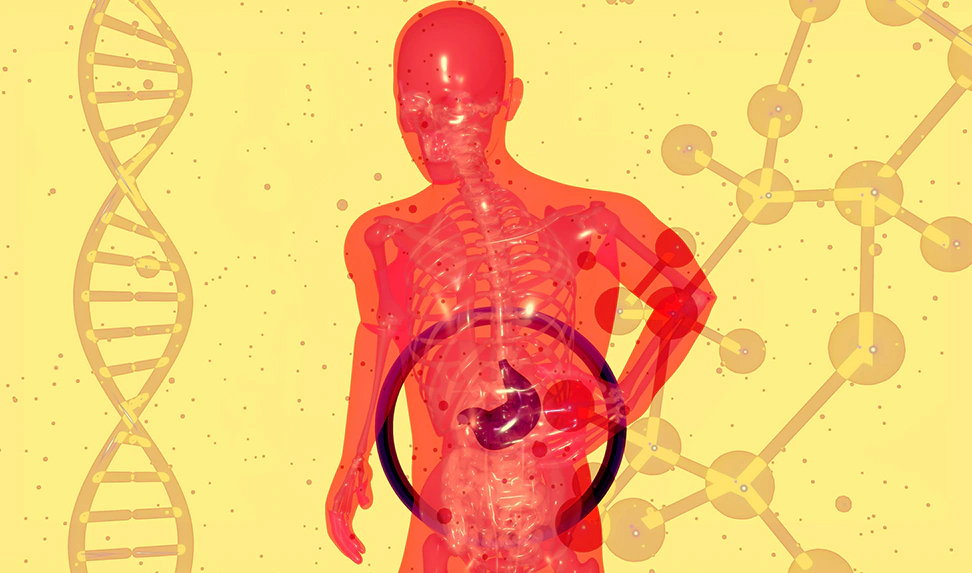
When we talk about estrogen, we tend to focus on the ovaries.

But producing estrogen is only part of the story. Your body also needs to transport it, metabolize it, and eventually eliminate it.

That’s where your liver and gut enter the picture.

What does the liver have to do with estrogen?

The liver helps break down and process estrogen into metabolites that can be removed from the body.

These processes involve several pathways and enzymes that work together as part of normal hormone metabolism.

You may have heard these described as the body’s detoxification pathways. While the term detox is often used loosely in wellness conversations, this is a real physiological process your body performs continuously.

Meet the estrobolome

Your gut is home to trillions of microorganisms, collectively known as the gut microbiome.

A subset of these microorganisms can influence estrogen metabolism. Researchers sometimes refer to this collection of microbes and their related functions as the estrobolome.

Certain gut bacteria produce an enzyme called beta-glucuronidase, which can release previously processed estrogen into a form that may be reabsorbed.

Scientists are investigating how the gut microbiome influences circulating estrogen levels and what that means for long-term health. It’s a promising area of research, although many questions remain.

Supporting a healthy gut

The good news? Many habits that support digestive health are also beneficial for overall metabolic health.

Eating fiber-rich foods, getting a variety of plant foods, staying hydrated, reducing intake of refined carbohydrates and sugar, and maintaining regular physical activity can all support normal digestive function.

If you’re struggling with persistent constipation, bloating, or digestive discomfort, it’s worth discussing with a healthcare professional rather than assuming hormones are the cause.

The takeaway

Your liver, gut, and endocrine system are connected in ways we’re still learning to understand.

Hormonal health isn’t just about how much estrogen your body makes. It’s also about what happens to that estrogen afterward.

Up next: Let’s look at how estrogen interacts with other hormone systems, including the thyroid, and what that can mean for reproductive health.

Hormones
10.11.2026
/
0
The Hidden Hormone Disruptors in Everyday Life

We usually think about hormones as something our bodies produce internally.

But our endocrine system can also be influenced by substances in the world around us.

Some are known as endocrine-disrupting chemicals, or EDCs.

What are endocrine disruptors?

EDCs are substances that can interfere with the body’s hormonal signaling.

Some can mimic the activity of naturally occurring hormones, including estrogen. Others may block hormone receptors or alter how hormones are produced, transported, or broken down.

Chemicals with estrogen-like activity are sometimes called xenoestrogens.

Researchers have identified potential endocrine-disrupting substances in everyday products, including certain plastics, pesticides, cosmetics, fragrances, and household materials.

Does exposure mean your hormones are imbalanced?

Not necessarily.

Scientists continue to investigate how different chemicals affect human health, including the importance of exposure levels, timing, duration, and individual susceptibility.

There is evidence linking some endocrine-disrupting chemicals with reproductive and metabolic health concerns. But it’s an oversimplification to assume everyday chemical exposure is the explanation for common hormonal symptoms.

Small changes that can reduce exposure

You don’t need to replace everything in your home overnight. Consider a few practical swaps:

  • Store and reheat food in glass or other food-safe containers instead of heating it in plastic.
  • Reduce unnecessary fragrance exposure where practical.
  • Wash fresh produce thoroughly.
  • Choose personal care and household products with ingredient information you’re comfortable with.

These steps won’t guarantee better hormone levels, but they can help reduce exposure to certain substances.

Knowledge, not fear

Understanding environmental influences is one part of understanding hormonal health.

And it’s worth remembering that hormones are affected by far more than what we put on our skin or store our food in.

Our internal systems play an important role, too.

Hormones
03.11.2026
/
0
Heavy Periods, Mood Swings, and Bloating: Could Hormones Be Involved?

Maybe it’s the week before your period when your mood feels unpredictable. Or the bloating that seems to arrive out of nowhere. Perhaps your periods have become heavier, your breasts feel unusually tender, or your sleep isn’t what it used to be.

These experiences are common. But that doesn’t mean you have to ignore them.

The symptoms worth paying attention to

Changes in estrogen, progesterone, and other hormones can influence how you feel throughout your cycle.

Some of the symptoms women report include:

  • Menstrual changes: Heavier periods, stronger cramps, irregular cycles, and breast tenderness.
  • Mood changes: Irritability, anxiety, emotional sensitivity, or mood swings.
  • Physical changes: Bloating, fluid retention, headaches, and fatigue.
  • Skin changes: Breakouts or changes in skin sensitivity.
  • Sleep changes: Difficulty falling asleep or staying asleep, particularly around hormonal transitions.

These symptoms aren’t specific to one hormonal imbalance. Stress, thyroid conditions, medications, and other health factors can produce similar experiences.

Look for patterns, not isolated symptoms

One of the most useful things you can do is start paying attention to when symptoms appear.

Do headaches consistently arrive before your period? Does your sleep change at certain points in your cycle? Have your periods become progressively heavier?

Try tracking your symptoms for one or two full cycles, including your mood, sleep, digestion, menstrual flow, and physical changes.

Patterns may begin to emerge that aren’t obvious day to day.

When should you investigate?

Symptoms that persist, worsen, or interfere with daily life deserve attention.

Heavy bleeding, particularly bleeding that lasts more than seven days or soaks through menstrual products hourly, should be discussed with a healthcare professional.

The goal isn’t to self-diagnose every symptom. It’s to build a clearer picture of what’s happening in your body.