


Be first in line. join the waitlist →

Heavy Periods, Mood Swings, and Bloating: Could Hormones Be Involved?

Maybe it’s the week before your period when your mood feels unpredictable. Or the bloating that seems to arrive out of nowhere. Perhaps your periods have become heavier, your breasts feel unusually tender, or your sleep isn’t what it used to be.

These experiences are common. But that doesn’t mean you have to ignore them.

The symptoms worth paying attention to

Changes in estrogen, progesterone, and other hormones can influence how you feel throughout your cycle.

Some of the symptoms women report include:

  • Menstrual changes: Heavier periods, stronger cramps, irregular cycles, and breast tenderness.
  • Mood changes: Irritability, anxiety, emotional sensitivity, or mood swings.
  • Physical changes: Bloating, fluid retention, headaches, and fatigue.
  • Skin changes: Breakouts or changes in skin sensitivity.
  • Sleep changes: Difficulty falling asleep or staying asleep, particularly around hormonal transitions.

These symptoms aren’t specific to one hormonal imbalance. Stress, thyroid conditions, medications, and other health factors can produce similar experiences.

Look for patterns, not isolated symptoms

One of the most useful things you can do is start paying attention to when symptoms appear.

Do headaches consistently arrive before your period? Does your sleep change at certain points in your cycle? Have your periods become progressively heavier?

Try tracking your symptoms for one or two full cycles, including your mood, sleep, digestion, menstrual flow, and physical changes.

Patterns may begin to emerge that aren’t obvious day to day.

When should you investigate?

Symptoms that persist, worsen, or interfere with daily life deserve attention.

Heavy bleeding, particularly bleeding that lasts more than seven days or soaks through menstrual products hourly, should be discussed with a healthcare professional.

The goal isn’t to self-diagnose every symptom. It’s to build a clearer picture of what’s happening in your body.

references
  1. Gore AC, et al. EDC-2: Endocrine Society’s Second Scientific Statement on Endocrine-Disrupting Chemicals. Endocr Rev. 2015. doi:10.1210/er.2015-1010
  2. Zierau O, et al. Role of female sex hormones, estradiol and progesterone, in mast cell behavior. Front Immunol. 2012. doi:10.3389/fimmu.2012.00169
  3. Wang HH, et al. Estrogen and cholesterol gallstone formation. Biochim Biophys Acta. 2009. doi:10.1016/j.bbalip.2009.06.006
  4. Bulun SE. Endometriosis. N Engl J Med. 2009. doi:10.1056/NEJMra0804690
  5. Bulun SE. Uterine fibroids. N Engl J Med. 2013. doi:10.1056/NEJMra1209993
  6. Gut microbial β-glucuronidases and the estrobolome. https://pmc.ncbi.nlm.nih.gov/articles/PMC6901331/
  7. Arafah BM. Increased need for thyroxine during estrogen therapy. N Engl J Med. 2001. doi:10.1056/NEJM200106073442302
  8. Egner PA, et al. Broccoli sprout beverage and airborne pollutant detoxication. Cancer Prev Res. 2014. doi:10.1158/1940-6207.CAPR-14-0103

‍

Continue Reading

Hormones
29.10.2026
/
0
Why One Hormone Test Doesn't Tell the Whole Story | Dr. Tara Scott

You've been told your hormone levels are "normal." But what if one blood test isn't telling the whole story?

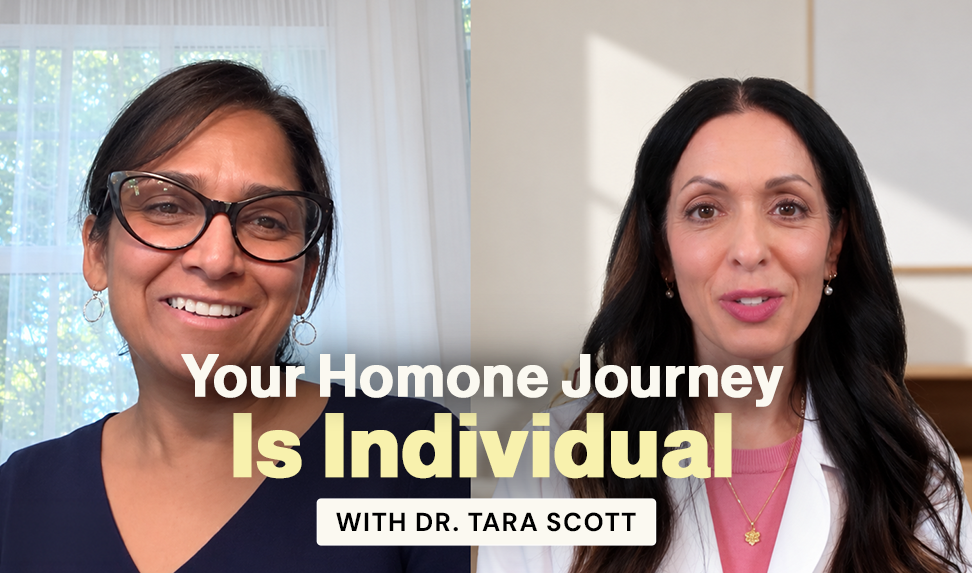
In the first episode of On the Qynside, Qyn Labs founder and CEO Shilpi Gupta sits down with Dr. Tara Scott, OB-GYN, certified menopause practitioner, and hormone health expert, to explore why hormone testing is more complicated than a single number.

Drawing on more than two decades of experience in hormone health, Dr. Scott shares why hormone fluctuations matter, how traditional testing can miss important context, and why understanding your individual patterns could help change the way we approach women's health.

In this episode, we explore:

  • Why "normal" hormone levels don't always tell the whole story
  • What a single hormone test can and can't reveal
  • The importance of understanding hormone fluctuations during perimenopause
  • Why personalized hormone data matters
  • The gaps in hormone education and women's healthcare
  • What's next for hormone monitoring

Your hormones change. Your understanding of them should, too.

‍

‍

🎥 Watch the full 9-minute conversation here: https://youtu.be/UWZo2Fe4dpQ

Hormones
10.11.2026
/
0
The Hidden Hormone Disruptors in Everyday Life

We usually think about hormones as something our bodies produce internally.

But our endocrine system can also be influenced by substances in the world around us.

Some are known as endocrine-disrupting chemicals, or EDCs.

What are endocrine disruptors?

EDCs are substances that can interfere with the body’s hormonal signaling.

Some can mimic the activity of naturally occurring hormones, including estrogen. Others may block hormone receptors or alter how hormones are produced, transported, or broken down.

Chemicals with estrogen-like activity are sometimes called xenoestrogens.

Researchers have identified potential endocrine-disrupting substances in everyday products, including certain plastics, pesticides, cosmetics, fragrances, and household materials.

Does exposure mean your hormones are imbalanced?

Not necessarily.

Scientists continue to investigate how different chemicals affect human health, including the importance of exposure levels, timing, duration, and individual susceptibility.

There is evidence linking some endocrine-disrupting chemicals with reproductive and metabolic health concerns. But it’s an oversimplification to assume everyday chemical exposure is the explanation for common hormonal symptoms.

Small changes that can reduce exposure

You don’t need to replace everything in your home overnight. Consider a few practical swaps:

  • Store and reheat food in glass or other food-safe containers instead of heating it in plastic.
  • Reduce unnecessary fragrance exposure where practical.
  • Wash fresh produce thoroughly.
  • Choose personal care and household products with ingredient information you’re comfortable with.

These steps won’t guarantee better hormone levels, but they can help reduce exposure to certain substances.

Knowledge, not fear

Understanding environmental influences is one part of understanding hormonal health.

And it’s worth remembering that hormones are affected by far more than what we put on our skin or store our food in.

Our internal systems play an important role, too.

Hormones
27.10.2026
/
0
Estrogen Dominance: What Does It Actually Mean?

Estrogen gets a lot of attention, especially when something feels off with our bodies. But estrogen isn’t the enemy. In fact, it’s essential to everything from our menstrual cycles and bone health to our brain, skin, and cardiovascular health.

So what happens when estrogen and other hormones aren’t working together as expected?

What is estrogen dominance?

You may have heard the term estrogen dominance, particularly in conversations about PMS, heavy periods, and perimenopause.

It’s a term commonly used in functional medicine to describe situations where estrogen’s effects are relatively strong compared with progesterone.

It’s important to understand that estrogen dominance isn’t a formally recognized medical diagnosis. But the relationship between estrogen and progesterone is very real.

Estrogen helps build the uterine lining during the first half of the menstrual cycle. After ovulation, progesterone rises and helps regulate that lining.

When ovulation becomes irregular, progesterone production may decrease, changing the way these hormones interact.

Can your estrogen levels be normal?

Yes. Hormone levels naturally fluctuate throughout the menstrual cycle, and a single measurement may not tell the whole story.

A result that appears normal on one day doesn’t necessarily explain what was happening earlier in your cycle or how your hormone patterns may be changing over time.

This is particularly relevant during perimenopause, when estrogen can fluctuate significantly and ovulation may become less predictable.

Understanding the bigger picture

Rather than focusing on whether estrogen is simply high or low, it can be more useful to understand your hormone levels in context. Where are you in your cycle? Are you ovulating regularly? What symptoms are you experiencing? Have those patterns changed? Because when it comes to hormones, context matters just as much as the numbers.