
Be first in line. join the waitlist →

What a time to be a Menopause Doc!

I always say to my patients, "I feel so lucky to be a Menopause provider right now, when I meet your concerns with YES! Of course we can consider HRT."

‍

However, that is an oversimplification of what is happening in women's health right now. There's a debate, especially in the menopause space, and you've probably seen it play out on social media. Providers sparring publicly, staking out positions, drawing lines. I understand the impulse. As providers, we were trained to defend our knowledge, to hold the line on "evidence-based medicine" as if it were a fortress, and not to succumb to patient whims as though we were a service industry.

‍

But as I watch it unfold, I keep asking myself: What's at the center of this work? Because it doesn't feel like it's the patient.

‍

In an age where FemTech can be worth billions, where social media turns expertise into influence and influence into empire, I wonder how much of what we're watching is really about women's health and how much is about money, spotlight, power, and the very human need for security.

‍

These forces have a way of quietly moving into the apex, displacing the thing that was supposed to be the fulcrum all along.

‍

When I was in training, I learned a few things that I'm now working to unlearn. I learned to hold boundaries firmly by telling women that certain symptoms were "not a GYN issue." I learned to be cautious and conservative, to wait until the evidence is airtight before acting. And I learned implicitly that the doctor's knowledge was what mattered most in the room.

‍

I practice very differently now. And I know exactly when the shift began.

‍

When I was pregnant in 2020, working in person during the height of COVID-19 uncertainty, I tried to figure out how to protect my growing baby while also showing up for my department and my patients. The data was sparse, but the logic felt clear to me: Flu A and B are known to be dangerous in pregnancy; why would we assume a novel respiratory virus was any different? I asked for a simple accommodation: to avoid working directly with known COVID-positive patients.

‍

I was met with resistance from my department chair and from my own OB provider at another institution, both seasoned clinicians, both mothers, both long-term mentors of mine. They told me there was good news: early data out of China showed no risk to pregnant people or their babies from COVID-19 infection.

‍

I remember thinking: how do they believe that? How do any of us?

‍

Looking back, I think I understand. They were managing a system on the verge of collapse. They needed people to stay calm, stay in place, keep showing up. The "evidence" became a tool for containment. I don't say that with bitterness. I say it because it was the first time I felt what so many of my patients must feel: trapped by the evidence and held at arm's length by the very framework that was supposed to protect me.

‍

It changed how I practice. I unlearned my rigid boundaries.

‍

Patients started coming to me having already done their homework by reading studies, listening to podcasts, building communities of shared knowledge. Sometimes they know more about a specific topic than I do. And rather than feeling threatened by that, I found myself becoming comfortable leaning into humility. It didn't feel like a compromise of my role, my status, or everything I'd worked for. If anything, it created something I hadn't expected: genuine connection. And that connection mattered.  There is so much "us versus them" energy between patients and physicians right now—so much accumulated mistrust. When a patient feels met rather than managed, something shifts. That's not a small thing.

‍

For too long, women experiencing menopause have been undertreated, dismissed, told their symptoms were normal, and told to get through it. For too long, women have been studied last, believed least, and treated with tools designed around someone else's biology. The opportunity in front of us, if we keep the patient at the center, is not about market share but about the opportunity for understanding. ‍‍

And I'll be honest about where I'm putting my energy.

‍
Today, I'm working with Qyn Labs, which is developing a hormone-monitoring device. I share that not to sell something, but because I think transparency is exactly what this moment calls for. What excites me about this work isn't the technology for its own sake; it's the possibility of finally collecting real, longitudinal data on women's hormonal health. Data that women can use to understand their own bodies. Data that we as clinicians can actually learn from. Data that can lead to measurable improvements in outcomes.

‍

That's the version of FemTech I want to be part of. Growth driven by curiosity. Research driven by humility. Innovation that earns trust by being worthy of it.

‍

The culture is shifting. Patients are coming in as partners now, as informed advocates for themselves, not as believers asked to place faith in a system that hasn't always deserved it.
Continue Reading

Hormones
29.10.2026
/
0
Why One Hormone Test Doesn't Tell the Whole Story | Dr. Tara Scott

You've been told your hormone levels are "normal." But what if one blood test isn't telling the whole story?

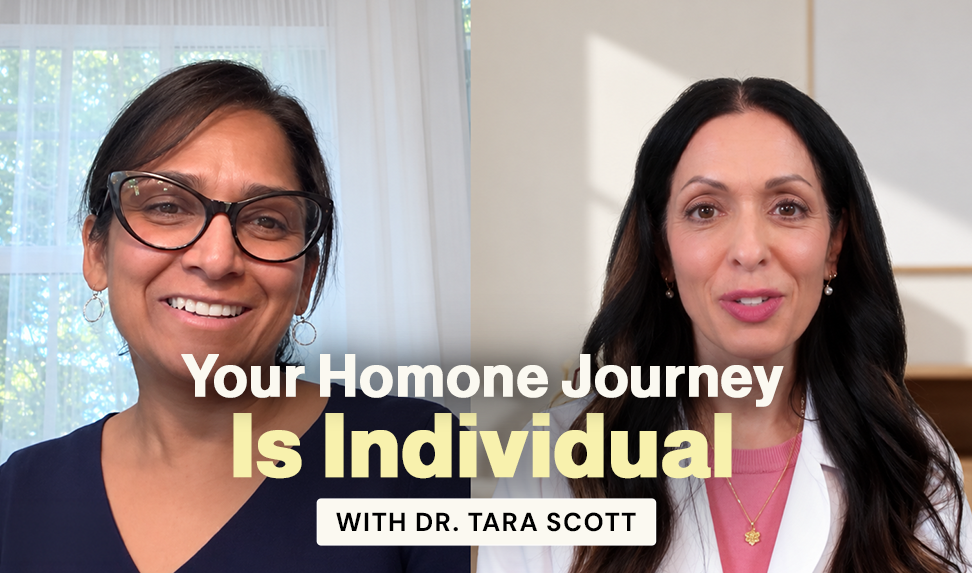
In the first episode of On the Qynside, Qyn Labs founder and CEO Shilpi Gupta sits down with Dr. Tara Scott, OB-GYN, certified menopause practitioner, and hormone health expert, to explore why hormone testing is more complicated than a single number.

Drawing on more than two decades of experience in hormone health, Dr. Scott shares why hormone fluctuations matter, how traditional testing can miss important context, and why understanding your individual patterns could help change the way we approach women's health.

In this episode, we explore:

  • Why "normal" hormone levels don't always tell the whole story
  • What a single hormone test can and can't reveal
  • The importance of understanding hormone fluctuations during perimenopause
  • Why personalized hormone data matters
  • The gaps in hormone education and women's healthcare
  • What's next for hormone monitoring

Your hormones change. Your understanding of them should, too.

‍

‍

🎥 Watch the full 9-minute conversation here: https://youtu.be/UWZo2Fe4dpQ

Hormones
10.11.2026
/
0
The Hidden Hormone Disruptors in Everyday Life

We usually think about hormones as something our bodies produce internally.

But our endocrine system can also be influenced by substances in the world around us.

Some are known as endocrine-disrupting chemicals, or EDCs.

What are endocrine disruptors?

EDCs are substances that can interfere with the body’s hormonal signaling.

Some can mimic the activity of naturally occurring hormones, including estrogen. Others may block hormone receptors or alter how hormones are produced, transported, or broken down.

Chemicals with estrogen-like activity are sometimes called xenoestrogens.

Researchers have identified potential endocrine-disrupting substances in everyday products, including certain plastics, pesticides, cosmetics, fragrances, and household materials.

Does exposure mean your hormones are imbalanced?

Not necessarily.

Scientists continue to investigate how different chemicals affect human health, including the importance of exposure levels, timing, duration, and individual susceptibility.

There is evidence linking some endocrine-disrupting chemicals with reproductive and metabolic health concerns. But it’s an oversimplification to assume everyday chemical exposure is the explanation for common hormonal symptoms.

Small changes that can reduce exposure

You don’t need to replace everything in your home overnight. Consider a few practical swaps:

  • Store and reheat food in glass or other food-safe containers instead of heating it in plastic.
  • Reduce unnecessary fragrance exposure where practical.
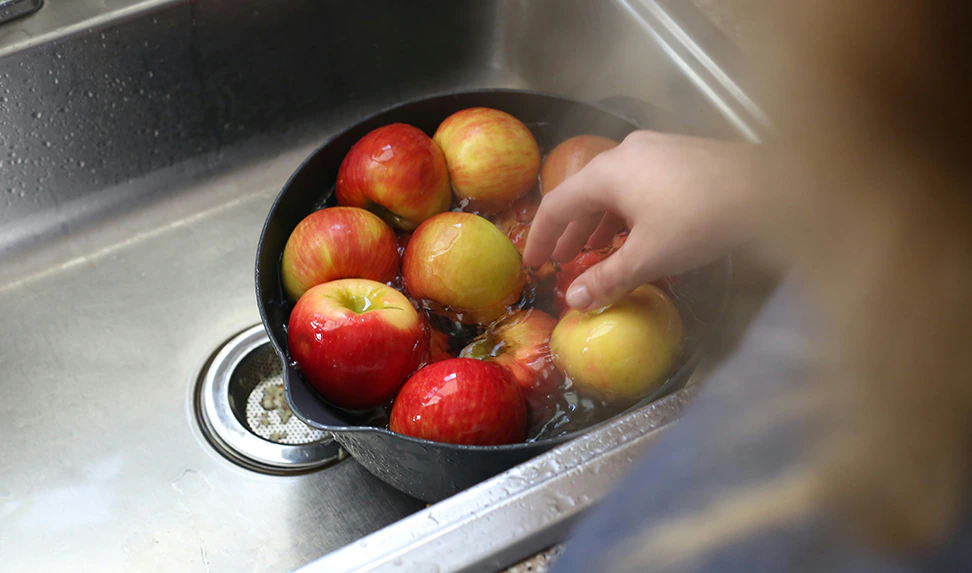
  • Wash fresh produce thoroughly.
  • Choose personal care and household products with ingredient information you’re comfortable with.

These steps won’t guarantee better hormone levels, but they can help reduce exposure to certain substances.

Knowledge, not fear

Understanding environmental influences is one part of understanding hormonal health.

And it’s worth remembering that hormones are affected by far more than what we put on our skin or store our food in.

Our internal systems play an important role, too.

Hormones
03.11.2026
/
0
Heavy Periods, Mood Swings, and Bloating: Could Hormones Be Involved?

Maybe it’s the week before your period when your mood feels unpredictable. Or the bloating that seems to arrive out of nowhere. Perhaps your periods have become heavier, your breasts feel unusually tender, or your sleep isn’t what it used to be.

These experiences are common. But that doesn’t mean you have to ignore them.

The symptoms worth paying attention to

Changes in estrogen, progesterone, and other hormones can influence how you feel throughout your cycle.

Some of the symptoms women report include:

  • Menstrual changes: Heavier periods, stronger cramps, irregular cycles, and breast tenderness.
  • Mood changes: Irritability, anxiety, emotional sensitivity, or mood swings.
  • Physical changes: Bloating, fluid retention, headaches, and fatigue.
  • Skin changes: Breakouts or changes in skin sensitivity.
  • Sleep changes: Difficulty falling asleep or staying asleep, particularly around hormonal transitions.

These symptoms aren’t specific to one hormonal imbalance. Stress, thyroid conditions, medications, and other health factors can produce similar experiences.

Look for patterns, not isolated symptoms

One of the most useful things you can do is start paying attention to when symptoms appear.

Do headaches consistently arrive before your period? Does your sleep change at certain points in your cycle? Have your periods become progressively heavier?

Try tracking your symptoms for one or two full cycles, including your mood, sleep, digestion, menstrual flow, and physical changes.

Patterns may begin to emerge that aren’t obvious day to day.

When should you investigate?

Symptoms that persist, worsen, or interfere with daily life deserve attention.

Heavy bleeding, particularly bleeding that lasts more than seven days or soaks through menstrual products hourly, should be discussed with a healthcare professional.

The goal isn’t to self-diagnose every symptom. It’s to build a clearer picture of what’s happening in your body.