


Hot flashes. Sleepless nights. Mood changes. For many women navigating hormonal changes, these symptoms become the starting point for treatment. But what if there's a bigger piece of the picture we're missing?
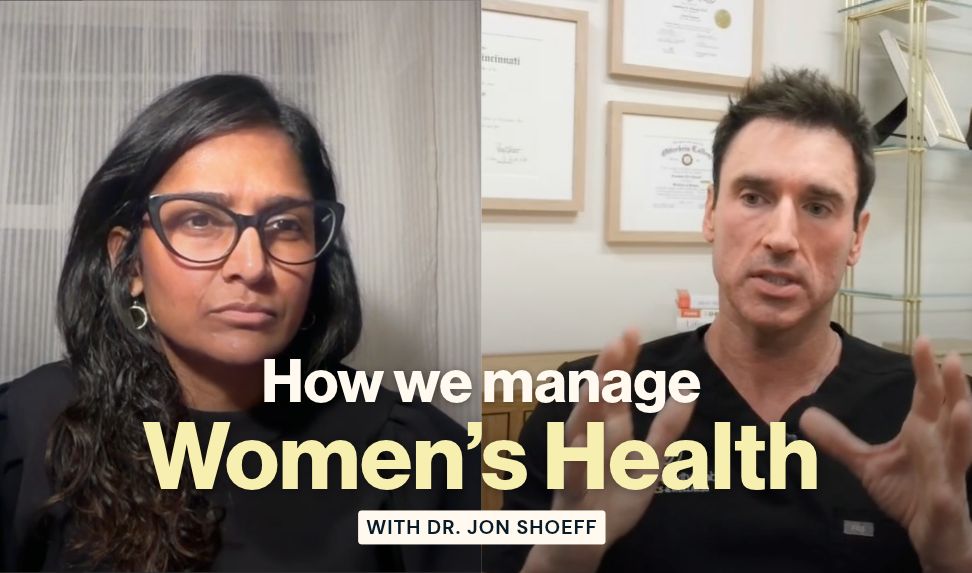
In this episode of On the Qynside, Qyn Labs founder and CEO Shilpi Gupta sits down with Dr. Jon Schoeff, surgeon and co-founder of The Longevity Lab, to explore a fundamental gap in women's healthcare: the lack of meaningful hormone data between doctor visits.
When Symptoms Tell Only Part of the Story
Today, hormone therapy is often guided by a combination of symptoms, clinical history, and occasional lab testing. But hormones are constantly changing, influenced by menstrual cycles, time of day, physiology, and other factors.
As Dr. Schoeff explains, the challenge isn't simply knowing whether a woman's hormone levels fall within a reference range. It's understanding what's happening in her body as an individual, and how those changes relate to how she feels.
For clinicians, that missing information can make personalized treatment particularly challenging.
The Opportunity in Better Data
Dr. Schoeff compares navigating healthcare without adequate data to trying to follow Google Maps without a working GPS. You may have a destination in mind, but without knowing where you are, it's difficult to determine the best route forward.
The same principle raises an interesting question for hormone health: What could we learn if we had a clearer picture of how hormone levels change over time?
More frequent monitoring could offer opportunities to explore relationships between hormonal fluctuations, symptoms, and other measures of health. But as Dr. Schoeff acknowledges, exactly how that information might improve treatment remains an open question.
And that's what makes this conversation so important.
A Different Way to Think About Hormone Health
At Qyn Labs, we're working toward a future where women have greater visibility into their hormone patterns through at-home, blood-based monitoring.
Because more data isn't necessarily the answer. Better understanding is.
Join Shilpi and Dr. Schoeff as they explore the questions that could shape the next chapter of women's hormonal healthcare.
Watch the full conversation below.